

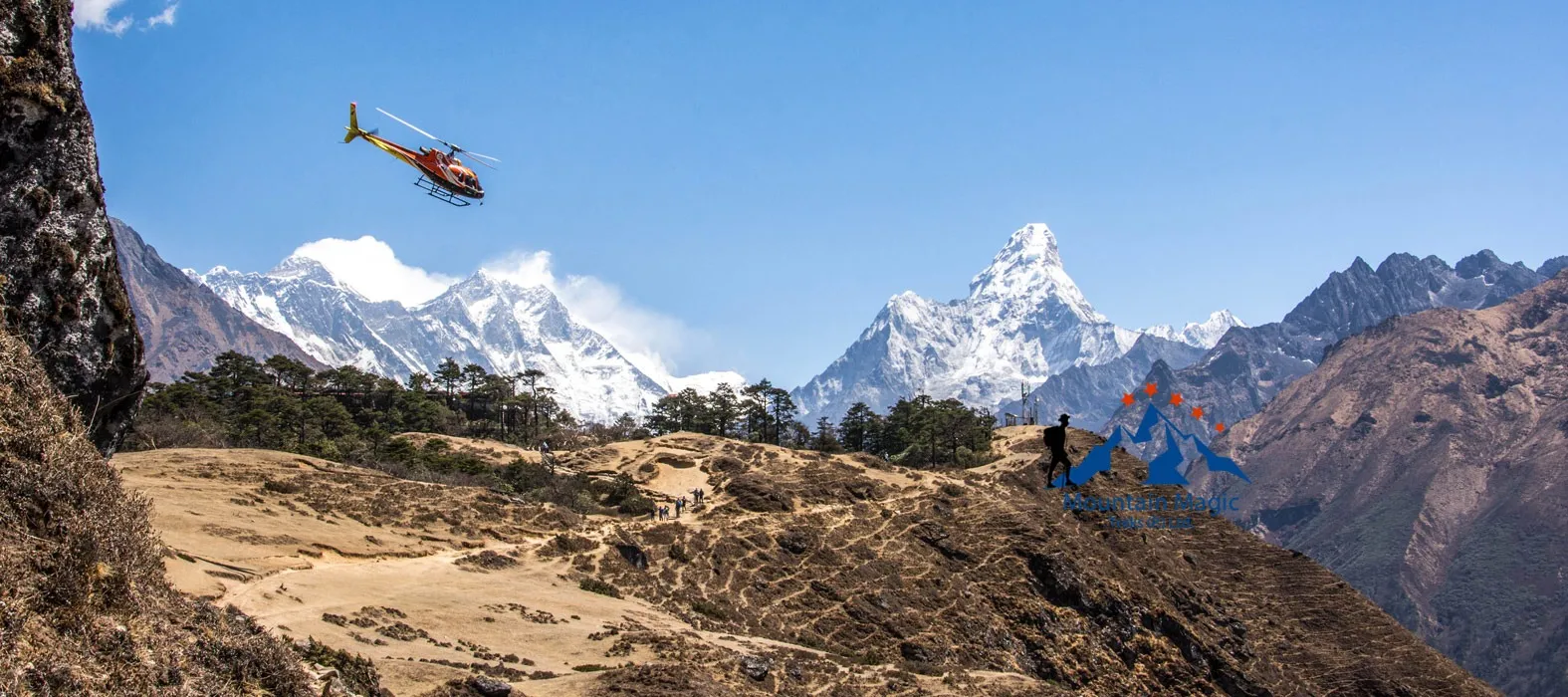
The Everest region does not reveal everything at once. The journey starts with green hills and busy village paths, then slowly changes into a colder and more open mountain world.
The Everest Base Camp Trek With Helicopter Return follows this natural change from lower valleys to the high Himalayas. Travelers walk through the Khumbu, reach Everest Base Camp and Kala Patthar, and then return by helicopter.
The biggest surprise is how much the landscape changes during one journey.
Green Hills Welcome You First
The lower section around Lukla and Phakding feels very different from the high mountain areas.
You can expect green slopes, forests, rivers, stone walls, and small settlements.
Start With an Easy Rhythm
The first days are not the time to test your maximum walking speed.
Use them to settle into the trail.
Find a comfortable pace and pay attention to how your feet and shoulders feel after several hours.
If your shoes or backpack cause problems, fix them early.
Small discomfort can become a bigger issue after many days.
Rivers Shape the Lower Route
The Dudh Koshi River and other mountain streams are an important part of the trail.
You will cross suspension bridges and walk beside sections of fast-moving water.
Take Your Time on the Bridges
Some bridges can look dramatic from a distance.
Walk steadily and follow your guide’s advice.
The views can be excellent, especially when prayer flags move above the valley and mountains rise in the background.
These crossings are simple parts of the route, but they often become favorite memories.
Namche Signals a Major Change
Namche Bazaar is one of the best-known settlements in the Everest region.
The climb toward the village can be tiring, but arriving there feels like reaching a new stage of the trek.
Make Your Acclimatization Day Count
The itinerary includes an acclimatization day in Namche.
You can explore the village or take a short walk nearby.
There is no need to spend the entire day doing hard exercise.
Rest, food, water, and sleep all support your adjustment to the increasing altitude.
Tengboche Adds Culture to the Journey
The trail from Namche toward Tengboche passes through forests and mountain paths.
Tengboche is known for its Buddhist monastery and impressive setting.
Observe Before You Move On
Take a few minutes to understand the cultural side of the region.
Prayer flags and prayer wheels are common sights.
If you visit the monastery, follow local customs and keep your behavior respectful.
Do not assume every place is simply a tourist attraction.
The people who live here have their own traditions and daily lives.
Dingboche Feels More Remote
As the trek reaches Dingboche, the scenery begins to open up.
The number of trees decreases, while large mountain slopes become more visible.
The air also feels thinner.
Accept a Slower Pace
Walking at high altitude is different.
You may need more breaks than before.
A short uphill section may feel surprisingly hard.
That is normal.
Do not compare your pace with another traveler.
The goal is to move safely and allow your body time to adjust.
The itinerary includes another acclimatization day at Dingboche.
The Mountains Take Over
After Dingboche, the trail becomes more rugged.
The green scenery is mostly behind you.
Rocky slopes, glaciers, and high peaks now dominate the landscape.
Look for More Than Everest
It is easy to spend the entire trek searching for one famous mountain.
Instead, notice how the whole environment changes.
Look at the rocks.
Watch the clouds.
Notice the shape of the valley.
Pay attention to the silence.
The high Himalayas are impressive because of the entire landscape, not just one peak.
Lobuche Brings the Destination Closer
Lobuche is one of the final major stops before Gorakshep.
The excitement usually increases because Everest Base Camp is getting closer.
Do Not Let Excitement Control Your Pace
Walking faster will not make the high-altitude section easier.
Keep your steps steady.
Take short breaks.
Eat enough food.
Drink water throughout the day.
Saving energy is especially important now because the trail ahead remains demanding.
Thukla Encourages Reflection
The trail around Thukla includes memorials for climbers who lost their lives in the Everest region.
The area can feel quiet and serious.
Remember That Everest Is Not an Ordinary Trail
The mountains are beautiful, but the conditions can be difficult.
Cold, altitude, wind, and changing weather all deserve respect.
The memorials are a reminder that preparation and good judgment matter at every stage.
Gorakshep Is a High-Altitude Base
Gorakshep is located at approximately 5,125 meters.
At this elevation, even normal activities can require extra effort.
Keep Your Daypack Simple
For the Base Camp walk, take only what you need.
Useful items include:
-
Water
-
Snacks
-
Warm clothing
-
Sunglasses
-
Sunscreen
-
Camera
-
Personal essentials
Avoid adding unnecessary weight.
A simple daypack makes a long day easier.
Walk Into Everest Base Camp
The route from Gorakshep to Everest Base Camp is one of the main highlights.
The listed elevation of Base Camp is approximately 5,364 meters.
The trail passes through a rugged landscape surrounded by glaciers and huge mountain walls.
Stop and Enjoy the Achievement
When you reach Base Camp, take photographs if you want.
Then put the camera away for a moment.
Look around.
Think about the distance you have covered.
You started in green valleys and have now reached one of the world’s best-known high-altitude locations.
That change is what makes the journey special.
Kala Patthar Offers a Bigger Picture
Kala Patthar reaches approximately 5,545 meters and is the highest point listed in the itinerary.
The viewpoint offers a broad look at Everest and the surrounding peaks.
Early Morning Has Its Own Beauty
The climb usually starts early.
The cold can be strong, but the changing light creates a memorable scene.
As the sun rises, the mountains slowly brighten.
Everest and nearby peaks can look completely different within minutes.
Take your time before beginning the descent.
The Helicopter Changes Your Perspective
The Everest Base Camp Trek With Helicopter Return has a different ending from a normal trekking route.
After reaching the major high points, travelers return by helicopter instead of walking the entire trail back.
See What You Walked From Above
From the air, the scale of the Khumbu becomes clearer.
Trails look tiny.
Villages appear small.
Rivers become narrow lines.
Mountain ridges stretch much farther than they seemed from the ground.
You may even recognize sections of the route you walked several days earlier.
The helicopter turns the return journey into another sightseeing experience.
Weather Should Always Be Considered
Helicopter flights depend on mountain weather and visibility.
Clouds, wind, or poor conditions can affect operations.
Leave Room in Your Schedule
If you have another important flight after returning to Kathmandu, avoid making a tight connection.
Give yourself extra time whenever possible.
A flexible schedule is much safer when traveling in remote mountain areas.
Every Altitude Has a Different Story
The Everest Base Camp Trek With Helicopter Return is interesting because the route keeps changing.
The lower trail introduces you to green valleys and local life.
Namche provides time to adjust.
Tengboche brings culture into the journey.
Dingboche prepares you for higher ground.
Lobuche and Gorakshep introduce the true high-altitude landscape.
Base Camp marks the main goal.
Kala Patthar provides a wider view.
The helicopter then lets you see the entire region from above.
The View Is Better Because You Walked There
A helicopter can show you the Himalayas quickly, but walking through them gives you a deeper connection with the landscape.
You remember the bridges you crossed.
You remember the villages where you stopped.
You remember the long climbs.
You remember the thin air.
Then, when you finally look down from the helicopter, those places have meaning because you experienced them on foot.
That is what makes the Everest Base Camp Trek With Helicopter Return more than a quick mountain trip.
It combines slow exploration with a fast return, giving travelers both a close view and a wide view of the Everest region.
FAQs
How high is Everest Base Camp?
The listed elevation is approximately 5,364 meters.
What is the highest point?
Kala Patthar is approximately 5,545 meters above sea level.
Where are the acclimatization days?
The itinerary includes acclimatization days in Namche Bazaar and Dingboche.
Is Base Camp reached by walking?
Yes. Travelers walk to Everest Base Camp and Kala Patthar before the helicopter return.
Why return by helicopter?
The helicopter saves several days of walking back and gives travelers a different aerial view of the Khumbu.
Can weather delay the flight?
Yes. Mountain weather can affect helicopter operations, so travelers should keep their schedule flexible.
